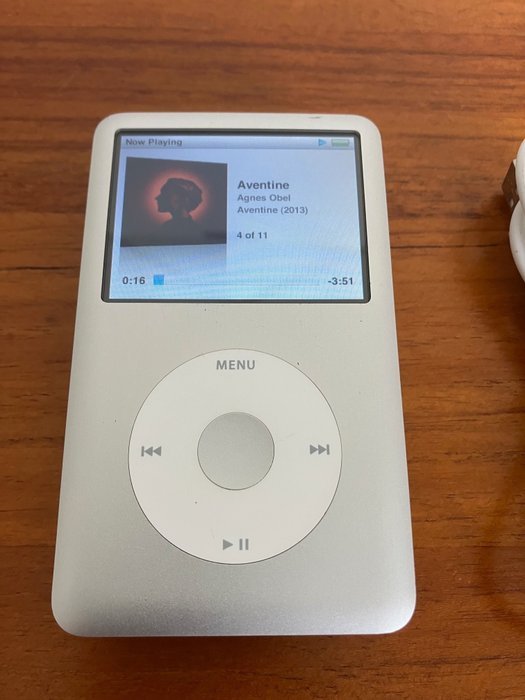
The rhythmic thrum of the Click Wheel, the satisfying scroll through thousands of songs, the undeniable aesthetic of brushed aluminum—these are the hallmarks of a bygone era that still resonate with a dedicated community today. While Apple officially retired the iPod line in 2022, the iPod Classic 6th Gen holds a special place in the hearts of collectors, audiophiles, and nostalgic tech enthusiasts. But what does it mean to be Buying, Selling, and Valuing an iPod Classic 6th Gen Today? It's far more nuanced than simply checking an old electronics bin; it's about understanding a thriving niche market where condition, capacity, and a touch of sentimentality dictate real-world prices.
This isn't just about owning a piece of history; for many, it's about reclaiming a dedicated music experience free from smartphone distractions, or perhaps turning a dusty relic into a profitable sale. Let's unearth the secrets of this surprisingly dynamic market.
At a Glance: Key Takeaways for Your iPod Classic 6th Gen
- Not All iPods Are Equal: While sealed first-gen iPods fetch thousands, the 6th Gen Classic has its own robust market driven by usability and modding potential.
- Condition is King: Mint condition with original packaging and accessories significantly boosts value, much more than a scuffed, standalone unit.
- Capacity Matters: Higher storage (especially 160GB) is generally more desirable, though 80GB and 120GB models still find buyers.
- Modding Market: Upgraded iPods (with flash storage, new batteries) are popular and can command higher prices if done well.
- eBay is Your Oracle: The most reliable way to gauge current market value for both buying and selling is to check "completed sales" on eBay.
- Nostalgia Factor: Beyond pure functionality, the emotional connection to a dedicated music player plays a huge role in its perceived worth.
Why the iPod Classic 6th Gen Endures: More Than Just a Music Player
Before diving into the nuts and bolts of transactions, it’s worth understanding why the iPod Classic, and specifically the 6th generation, still garners so much attention. Released in 2007 (and updated in 2008 with the 120GB and then 160GB models), the 6th Gen was the first to officially carry the "Classic" moniker. It represented the pinnacle of Apple's hard drive-based music players before flash memory and touchscreens took over.
Its appeal today stems from several factors:
- Dedicated Experience: In an age of notification overload, a device solely for music offers a digital detox. No apps, no emails, just your library.
- Tactile Satisfaction: The iconic Click Wheel remains a marvel of user interface design, offering a satisfying, intuitive way to navigate vast music collections.
- Storage Capacity: With up to 160GB of hard drive space, these devices can hold tens of thousands of songs, far more than many modern smartphones are dedicated to.
- Modding Potential: This is a huge draw. The 6th Gen is relatively easy to open and upgrade with solid-state storage (iFlash boards) and larger batteries, breathing new life and vastly improving durability and battery performance.
- Audio Quality: Many audiophiles swear by the DAC (Digital-to-Analog Converter) and headphone amplifier in the Classic, preferring its sound profile over some modern devices.
It’s this blend of nostalgia, functionality, and upgradeability that fuels the market for the iPod Classic 6th Gen.
Valuing Your iPod Classic 6th Gen: Decoding its Worth
Determining the true value of an iPod Classic 6th Gen isn't an exact science, but it's far from guesswork. It’s a dynamic interplay of factors that can swing a price by tens or even hundreds of dollars. Think of yourself as an appraiser, meticulously examining every detail.
The Condition Spectrum: From "Holy Grail" to "Parts Bin"
The single biggest determinant of value is condition. Unlike many modern electronics that quickly depreciate, the iPod Classic market heavily rewards preservation.
- New In Box (NIB) / Sealed: The absolute "holy grail." While incredibly rare for a 6th Gen Classic (most were opened and used), a truly factory-sealed unit could command a premium that dwarfs typical used prices. We're talking potentially hundreds, perhaps even over a thousand dollars for the right model. The first-generation iPod Classic, for instance, saw a sealed unit sell for nearly $29,000! While a 6th Gen won't reach those dizzying heights, the principle holds.
- Mint / Like New with Original Packaging: An iPod that shows virtually no signs of use, has perfect functionality, and includes its original box, manual, dock connector cable, and sometimes even the original headphones, is highly desirable. These can fetch the top end of the used market.
- Excellent / Very Good: Fully functional with minor cosmetic blemishes (light scratches on the screen or back, small scuffs on the housing). No significant dents or deep scratches.
- Good / Working: Fully functional but shows clear signs of use—moderate scratches, scuffs, possibly a worn Click Wheel. The hard drive and battery are still working, though battery life may be diminished.
- Fair / For Parts: May have significant cosmetic damage, non-functional components (e.g., dead hard drive, weak battery, broken headphone jack, damaged screen). These are often bought by modders for parts or for a complete overhaul.
Key Value Drivers for the 6th Gen Classic
Beyond general condition, specific attributes directly impact how much a 6th Gen is worth:
- Storage Capacity: The 6th Gen was released in 80GB (thin model), 120GB (thin model), and 160GB (thick model). Generally, the 160GB models command the highest prices due to their capacity. The 80GB and 120GB versions are still very popular, especially as modding platforms where the original hard drive is replaced anyway.
- Cosmetic Integrity:
- Screen: A flawless, bright screen with no dead pixels or backlight issues is crucial.
- Front Casing & Click Wheel: Minimal scratches, no cracks, and a Click Wheel that responds perfectly and isn't overly shiny from use.
- Rear Casing: This is often the most scratched part. A pristine, mirror-like back (without engraving) is rare and adds significant value.
- Functional Health:
- Hard Drive: The original mechanical hard drives are prone to failure. An iPod with a healthy hard drive (check SMART data in diagnostics mode) is more valuable than one with a "clicking" or failing drive.
- Battery Life: A good battery that holds a charge for several hours without music playing is a major plus. Expect older batteries to be degraded.
- Ports: The 30-pin dock connector and headphone jack must be fully functional.
- Original Accessories & Packaging: A complete set—original box, plastic inserts, documentation, USB cable, headphones, and sometimes a dock adapter—can add 25-50% or more to the value of an excellent condition unit.
- Color: While less pronounced than on some limited editions, the black models are often perceived as slightly more desirable than silver, purely for aesthetic reasons.
- Modded vs. Original: This is a fascinating dynamic. A professionally modded iPod Classic 6th Gen (with flash storage, new battery, possibly a new front plate) can often fetch more than an original unit in similar condition, especially if the mods are popular and well-executed. However, a poorly modded unit, or one with non-original parts presented as original, will reduce value.
Where to Check Current Market Value: Your Best Resource
Forget guessing games. The most accurate way to value an iPod Classic 6th Gen is to look at completed sales on platforms like eBay.
- How to Use eBay Completed Sales:
- Go to eBay.com.
- Search for "iPod Classic 6th Gen 160GB" (or your specific model/capacity).
- On the left-hand sidebar (or by clicking "Filters" on mobile), scroll down and select "Sold Items" and "Completed Items."
- This will show you actual transaction prices for items that have recently sold. Look for units that closely match the condition, capacity, and included accessories of the iPod you're trying to value. Green prices indicate successful sales; red prices mean the item didn't sell at the asking price.
This method gives you real-time, data-backed insights into what buyers are actually paying. You can also check other marketplaces like Mercari, Facebook Marketplace, or specialized audio forums, but eBay remains the most liquid and transparent market.
Buying an iPod Classic 6th Gen Today: What to Look For and Pitfalls to Avoid
So, you're ready to dive in and acquire one of these iconic devices. Being an informed buyer is crucial to getting a good deal and avoiding disappointment.
The Buyer's Checklist: Essential Considerations
- Capacity First, Then Condition: Decide if you want an 80GB, 120GB, or 160GB model. If you plan to mod with an iFlash board, the original capacity is less critical, but a functioning original hard drive might still be a plus. Prioritize cosmetic condition if you want a pristine display piece, or functional health if you're planning an immediate mod.
- Hard Drive Health: This is paramount for unmodded units. Ask the seller to run the diagnostic mode:
- Reboot the iPod (hold Menu + Center button).
- As the Apple logo appears, hold Center + Left buttons simultaneously.
- Navigate to "IO" then "HardDrive" then "HDSMARTData."
- Look for "Retracts" and "Reallocs." High numbers (e.g., hundreds or thousands) indicate a failing hard drive. Zero or low numbers are ideal.
- A "clicking" sound is a definitive sign of an imminent hard drive failure.
- Battery Life: Old iPods almost always have degraded batteries. Ask about actual playback time. If the battery dies quickly, factor in a replacement cost ($15-$30 for the battery, plus tools).
- Screen Condition: Check for dead pixels, lines, or dim spots. The backlight should be even.
- Click Wheel & Buttons: Ensure all buttons (Menu, Play/Pause, Forward, Back, Center) are clicky and responsive. The Click Wheel should scroll smoothly and accurately.
- Ports: Test both the 30-pin dock connector (for charging and syncing) and the 3.5mm headphone jack. Wiggle the headphone jack to check for crackling, indicating a loose connection.
- Originality vs. Mods: Decide if you want an untouched, original unit or one that's already been modded. Modded units should clearly state their upgrades (e.g., "128GB iFlash Quad, new battery"). Be wary of units advertised as "original" that show signs of modification.
Where to Hunt for Your Classic
- eBay: Still the largest marketplace. Use the "Sold Items" filter to research pricing, then filter by "Buy It Now" or "Auction" for active listings. Many sellers specialize in refurbished or modded iPods here.
- Specialized Forums & Communities: Websites like r/iPod on Reddit, or dedicated audiophile forums, often have classified sections where enthusiasts buy and sell. These can be great for finding modded units or connecting with knowledgeable sellers.
- Local Marketplaces (Facebook Marketplace, Craigslist): Can yield hidden gems at lower prices because sellers might not know the true value, but involve more risk (no buyer protection). Always meet in a public place.
- Refurbished Dealers: Some online stores specialize in refurbishing old Apple products. While prices might be higher, you often get a warranty and a guarantee of functionality.
Buyer Beware: Common Pitfalls
- "Works Great!" (But the Hard Drive is Dying): Many sellers aren't technically savvy enough to check SMART data. A "working" iPod with a failing hard drive will quickly become a "for parts" unit. Always ask for diagnostics.
- Exaggerated Condition Descriptions: "Mint" often means "has scratches." Always ask for more photos from different angles if the provided ones are sparse or poorly lit.
- Missing or Generic Accessories: If the listing promises "original box and accessories," confirm they are actually original Apple components, not cheap third-party replacements.
- Ghost Seller/No Communication: If a seller is unresponsive to questions about diagnostics or condition, move on.
- Price Too Good to Be True: It usually is. A 160GB 6th Gen in "mint condition" for $50 is almost certainly a scam or has a major undisclosed flaw.
Selling Your iPod Classic 6th Gen: Maximizing Your Return
If you're looking to part ways with your venerable music player, a little preparation can significantly increase your profit and ensure a smooth transaction.
Pre-Sale Checklist: Get Your iPod Market-Ready
- Thorough Cleaning: Wipe down the entire device. Use a microfiber cloth for the screen and front, and a very slightly damp cloth (then dry) for the back and sides. Clean out the headphone jack and 30-pin port with a non-conductive tool (e.g., a toothpick) to remove lint. A clean iPod looks more appealing.
- Full Functionality Test:
- Charge the battery fully.
- Play music through headphones for an extended period to check battery life.
- Test all buttons and the Click Wheel.
- Connect it to a computer to ensure it syncs correctly.
- Run the hard drive diagnostics (as described in the "Buying" section) and note the SMART data.
- Gather Accessories: Collect any original box, manuals, cables, and headphones. Even a non-working original accessory (e.g., frayed headphones) can add to the "completeness" factor.
- Factory Reset: Erase all your music and data by doing a factory reset (Settings > About > Reset > All Settings, or restore via iTunes/Finder). This protects your privacy.
Crafting Your Listing: Honesty and Detail Sell
- High-Quality Photos: This is non-negotiable. Take multiple, well-lit photos from all angles. Capture the screen (on and off), front, back (especially to show any scratches), sides, Click Wheel, and ports. If you have the original box, photograph that too. Be honest about any flaws – clear photos of scratches prevent disputes.
- Detailed, Transparent Description:
- Model & Capacity: Clearly state "Apple iPod Classic 6th Generation 160GB" (or 80GB/120GB).
- Condition: Be brutally honest. Use terms like "excellent used condition," "minor cosmetic wear," "light scratches on back," "fully functional," or "for parts/not working."
- Functionality: Specify battery life (e.g., "holds charge for 8+ hours playing music"), hard drive health ("SMART data shows 0 reallocs"), and confirm all buttons and ports work.
- Included Accessories: List everything included (iPod, original USB cable, original box, etc.).
- Mods (if applicable): Clearly state if it's been modified (e.g., "Upgraded with 256GB iFlash Quad and new 2000mAh battery"). Provide details and mention who performed the mod if professional.
- Why You're Selling: A brief, honest reason (e.g., "upgraded to a newer model," "no longer use it") can build trust.
- Pricing Strategy:
- Research: Use eBay's "Sold Items" filter to see what similar iPods have recently sold for. This is your baseline.
- Condition-Based Adjustment: Price higher for better condition and completeness, lower for more wear or missing accessories.
- Auction vs. Buy It Now: Auctions can sometimes generate bidding wars, but "Buy It Now" offers stability and a quicker sale at your desired price. Consider "Best Offer" options for flexibility.
Shipping Your iPod: Protect Your Investment
- Secure Packaging: Use a sturdy box, not a padded envelope. Wrap the iPod in bubble wrap or foam, ensuring it can't shift inside the box. Fill any voids with packing peanuts or crumpled paper.
- Insurance & Tracking: Always use a shipping service with tracking. For higher-value iPods, consider adding shipping insurance. This protects both you and the buyer.
Where to Sell Your Classic
- eBay: The widest audience and best buyer protection for both parties. Expect to pay selling fees.
- Specialized Forums: Often lower fees, and you're selling to knowledgeable buyers who appreciate the device.
- Local Marketplaces: Good for avoiding shipping costs and fees, but require meeting strangers and often fetch lower prices as buyers expect a deal.
The "Modding" Factor: Enhancing Value and Longevity
The modding community around the iPod Classic is vibrant, and for good reason. The original hard drives are fragile and prone to failure, and batteries inevitably degrade. This has led to a thriving ecosystem of upgrades that can significantly enhance a 6th Gen Classic, often increasing its value.
Common mods include:
- iFlash Conversion: Replacing the mechanical hard drive with an iFlash adapter and an SD card or CF card. This makes the iPod silent, much more durable, and often extends battery life. Capacities can go up to 1TB or more.
- Battery Upgrade: Installing a higher-capacity battery.
- New Front/Back Plates: Replacing scratched casings with new ones, sometimes in custom colors.
- Click Wheel Replacement: Swapping out a worn Click Wheel.
A well-executed mod, performed by someone with experience, can make an iPod Classic 6th Gen more desirable and valuable than an unmodded, original unit, especially if it offers significant capacity or battery life improvements. For example, a 6th Gen 160GB modded with a 256GB iFlash and a new battery could easily fetch higher prices than an original 160GB unit with an aging hard drive and weak battery.
However, poorly done mods, or units where the modification isn't clearly disclosed, can detract from value. Transparency is key. If you're selling a modded iPod, highlight the upgrades and (if possible) provide proof of the components used.
Beyond the 6th Gen: Understanding the Broader iPod Collector's Market
While our focus here is squarely on the iPod Classic 6th Gen, it's helpful to understand where it sits in the larger iPod collector's landscape. This context helps set realistic expectations for value.
- The Early Gems: First-generation iPod Classics are often considered the most collectible, with sealed units reaching astronomical figures (one sold for nearly $29,000!). Even working units in good condition can range from $200-$500, or up to $1,000 with original packaging.
- Limited Editions: Models like the fourth-generation iPod Classic U2 special edition, especially in its original box, can command prices up to $1,600 due to their scarcity and pop-culture tie-in.
- Other Models:
- iPod Mini: Used units are generally $20-$60, but mint condition with original packaging can hit $200+.
- iPod Nano: Prices vary wildly. Fourth and fifth-generation Nanos are typically $30-$100. Sealed first, second, or third-gen models can fetch $350, with later Nanos also seeing value up to $250.
- iPod Shuffle: Generally $20-$40, unless it's a sealed unit or a unique color.
The iPod Classic 6th Gen, while not typically reaching the peak collector prices of first-gen sealed units or limited editions, occupies a crucial space as a highly functional, highly moddable, and still aesthetically pleasing piece of tech history. Its value is often driven by its utility and upgrade potential as much as its collector appeal. For a deeper dive into this specific model, including detailed specs and troubleshooting, you might find our comprehensive iPod Classic 6th Generation guide particularly useful.
What's Next for Your iPod Classic 6th Gen?
Whether you're looking to buy, sell, or simply appreciate the iPod Classic 6th Gen, the market is vibrant and offers plenty of opportunities. For buyers, it’s a chance to own a piece of dedicated music history, with the option to modernize it through clever modifications. For sellers, it's about finding the right audience and showcasing your device's unique qualities.
Ultimately, the iPod Classic 6th Gen is more than just an obsolete gadget; it's a testament to good design, a dedicated music experience, and a community that refuses to let true classics fade away. Its value, both monetary and sentimental, is a tribute to its lasting legacy. Happy hunting, and happy listening.