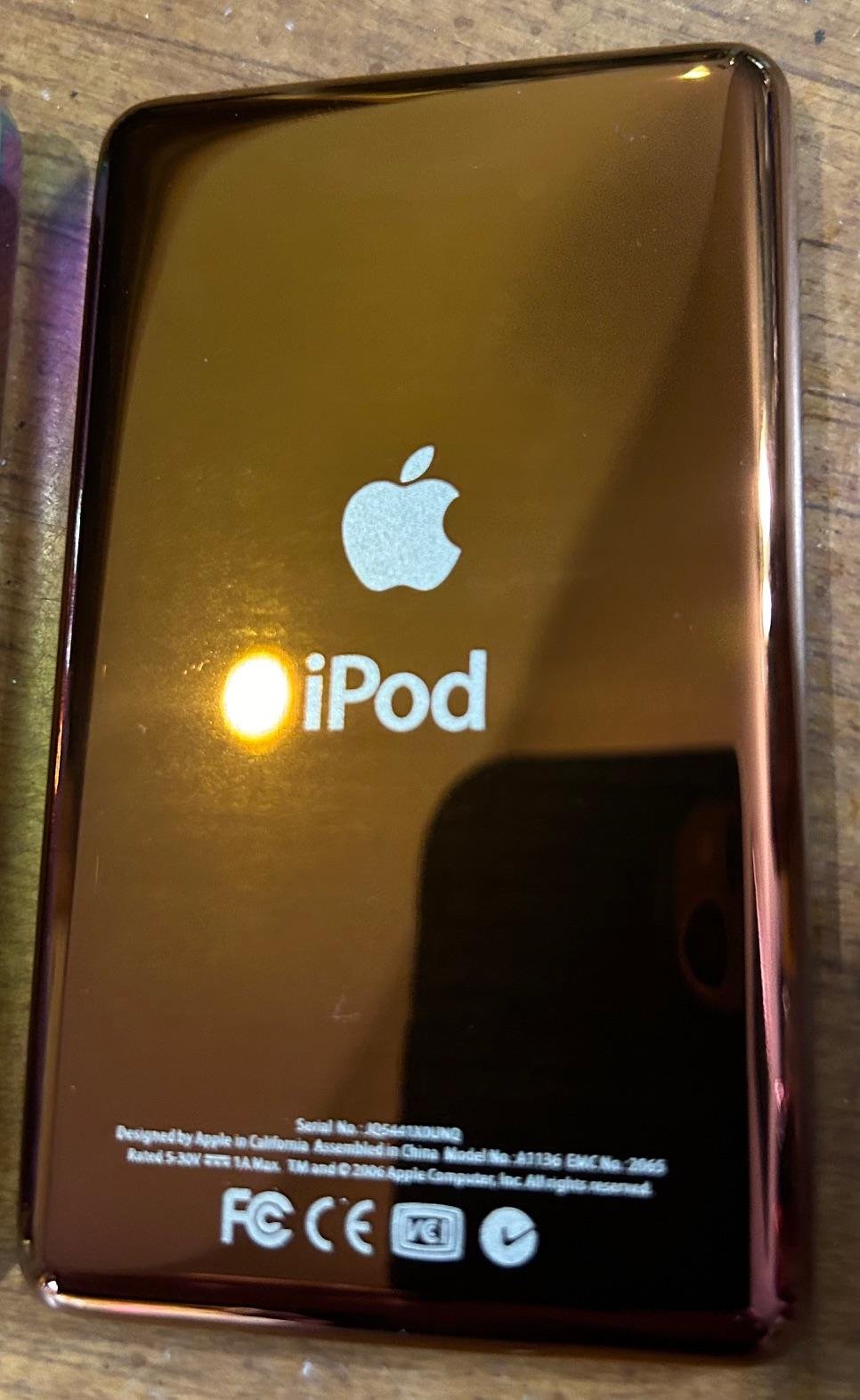
Before streaming services conquered our playlists and smartphones became our primary music players, there was a simpler time. A time when a dedicated device, perfectly designed for digital audio, reigned supreme. At the pinnacle of this era stood the iPod Classic, formally designated as such with its sixth-generation release. This wasn't just another MP3 player; it was Apple's longest-lived and arguably most beloved model in the main iPod line, a device whose thoughtful design and robust capabilities continue to captivate enthusiasts today. Dive into The Apple iPod Classic 6th Generation: A Comprehensive Overview as we explore what made it an icon, its unique journey, and the vibrant community that refuses to let it fade.
At a Glance: The Enduring Charm of the iPod Classic 6th Gen
- Birth of a Classic: Officially launched September 5, 2007, and retired September 9, 2014, making it the longest-running main iPod model.
- Design Evolution: Moved from glossy plastic to a sleek anodized aluminum front plate, immediately signaling its premium status.
- Storage King: Introduced with capacities up to 160 GB, a massive amount of music for its time, all powered by a 1.8-inch hard drive.
- UI Revamp: Featured an overhauled user interface with more graphics and the iconic Cover Flow.
- Modding Masterpiece: Despite its discontinuation, it boasts a thriving community dedicated to upgrading its storage to SSDs, enhancing battery life, and even adding modern features like Bluetooth.
- A "Classic" for a Reason: Its Click Wheel interface and dedicated music experience offer a unique alternative to modern touchscreen-only devices.
The Unveiling of an Icon: What Made it "Classic"?
To understand the 6th generation, it's helpful to quickly rewind. The original iPod, launched in 2001, promised "1,000 songs in your pocket." Over successive generations, it evolved from monochrome screens and mechanical scroll wheels to color displays, photo capabilities, and ultimately, video playback with the 5th generation. Each iteration brought significant leaps in design, storage, and functionality, solidifying the iPod's place in popular culture.
Then came September 5, 2007. Apple unveiled its final iteration of the "iPod with video," giving it a new, definitive name: the "iPod Classic." This wasn't just a marketing label; it was an acknowledgment of its lineage and its position as the quintessential iPod experience. It carried forward the spirit of its predecessors while introducing crucial updates.
Gone was the glossy plastic front of the 5th generation, replaced by a sophisticated anodized aluminum faceplate, available in silver and later dark gray. This shift not only lent it a more premium feel but also improved durability. The system font received a subtle tweak, moving away from Podium Sans. Under the hood, the processor platform transitioned from PortalPlayer to Samsung, leading to noticeable improvements in performance and, critically, battery life. The 6th gen boasted an impressive 36 hours of music playback and 6 hours of video, a dramatic leap.
However, not all changes were universally praised. The 6th generation marked a departure from Wolfson Microelectronics for its audio chip, switching to Cirrus Logic. This decision, unfortunately, received some negative critical reception, with many audiophiles perceiving a reduction in output performance compared to earlier Wolfson-equipped models. Despite this, its robust feature set and massive storage capacities — initially 80 GB ($249) and a whopping 160 GB ($349) — firmly established its dominance in the portable music player market. The larger 160 GB model, utilizing a dual-platter hard drive, was slightly thicker (13.5 mm) than its 80 GB (10.5 mm) counterpart.
Evolution of a Legend: The 6th Gen's Lifespan and Its Revisions
The iPod Classic 6th generation wasn't a static product; it underwent several subtle yet important revisions during its impressive seven-year run. Its longevity means that "6th generation" can refer to a few different hardware configurations, each with its own quirks and considerations, particularly for those looking to buy or modify one today.
Initial Release (September 5, 2007)
- Capacities: 80 GB (10.5 mm thick) and 160 GB (13.5 mm thick).
- Design: Anodized aluminum front (silver), silver rear case. Large capacity label prominently displayed on the rear.
- Software: Featured an overhauled user interface with more graphical elements and the visually engaging Cover Flow feature for browsing albums.
- Video Output: Supported component video output via Apple's proprietary AV cable for progressive scan, but notably removed support for non-authenticated cables and video output through the headphone jack. Firmware prior to version 2.0.2 in these early models was limited to 28-bit addressing, a detail that becomes relevant for modding.
The 2008 Refresh (September 9, 2008)
A year after its debut, Apple streamlined the lineup.
- Capacities: The 80 GB and the thicker 160 GB models were discontinued. A new, thinner 120 GB model was introduced, maintaining the more compact 10.5 mm profile, priced at $249.
- Design: The black front plate option was changed to a slightly darker gray.
- Software Enhancements: This revision introduced the "Genius" feature, which could create instant playlists of songs that went well together. It also added full support for TRRS headsets with remote control and microphone functionalities.
The 2009 Minor Refresh (September 9, 2009) – The "7th Gen" Misconception
This revision is often, and incorrectly, referred to as the "7th generation" by some users, but it remained firmly within the 6th generation family.
- Capacity: The 120 GB model was replaced by a new 160 GB model. Crucially, this 160 GB model achieved its capacity with a single-platter hard drive, allowing it to fit into the slimmer 10.5 mm casing, priced at $249. This was a significant engineering feat, offering maximum storage in the most compact form factor.
- Software Enhancements: Added "Genius Mixes" (automatic playlists based on genre) and introduced support for 48-bit sector numbers, expanding potential future storage capabilities beyond the 28-bit limit of earlier models. The capacity label on the rear case was also shrunk to a smaller font, similar to the Rev B style.
- Firmware Compatibility: It's important to note that firmware versions between revisions are generally not compatible, though user-facing software differences are often minimal.
The 2012 Minor Hardware Revision (Approx. September 12, 2012)
Towards the end of its life, a final, subtle hardware revision occurred.
- Changes: No major functional changes were noted. This revision primarily involved alterations to the firmware ID and WTF mode identifier. Sometime during the Rev B lifespan, the copyright date was removed from the regulatory label. Users attempting to validate purchase dates with serial numbers from these later Rev C models may encounter Apple's "Sorry, we're currently unable to validate your purchase date" message.
Ultimately, after an impressive run, Apple CEO Tim Cook announced the iPod Classic's discontinuation on September 9, 2014. He attributed the decision to suppliers ceasing production of necessary parts (specifically the 1.8-inch hard drives) and low consumer interest, signaling the end of an era for dedicated music players.
Inside the Click Wheel: Core Technology and User Experience
The iPod Classic wasn't just a piece of hardware; it was an experience. At its heart was the ingenious Click Wheel, a minimalist interface that perfectly married form and function. This touch-sensitive circle, which evolved from the mechanical scroll wheel of the 1st gen and the non-mechanical touch wheel of the 3rd gen, allowed for seamless navigation with just five buttons integrated directly into its design.
You had the Menu button, which not only navigated backward but also returned you to the main menu with a longer press. The Center button served as your selection key. Play/Pause also doubled as the power-off button when held. And of course, Skip Forward/Fast Forward and Skip Backwards/Rewind gave you precise control over your music. This intuitive design, coupled with anti-aliased graphics and text with smooth sliding animations on its 2.5-inch 320x240 backlit color display, made browsing thousands of songs a joy, not a chore.
Underneath that elegant interface, the iPod Classic housed robust technology. All generations relied on a 1.8-inch hard drive for storage, a marvel of miniaturization for its time. The operating system resided directly on this storage medium, with a crucial bootloader held in a NOR flash ROM chip. Most iPod models featured 32 MB of RAM, but the higher-capacity 60 GB and 80 GB fifth-generation and all sixth-generation models were equipped with 64 MB. This extra RAM was vital for the operating system and for caching songs, a clever trick that conserved power by reducing the frequency of hard drive spins.
For those who craved more customization or simply a different experience, a vibrant community developed custom firmware alternatives. Tools like Rockbox, Pwnage 2.0, and wInd3x allowed users to unlock additional functionalities or even install alternative operating systems like iPodLinux, pushing the boundaries of what these devices could do. These options remain a testament to the open-source spirit and the deep affection users had for their iPods.
Unleashing Potential: The Thriving iPod Classic Modding Scene
Long after its discontinuation, the Apple iPod Classic 6th generation isn't just gathering dust in drawers; it's being reborn. A robust and enthusiastic modding community has emerged, turning what was once a legacy device into a customized, high-performance audio player capable of outshining many modern alternatives. Why the enduring appeal? Many users simply prefer the tactile satisfaction of the Click Wheel, the dedicated offline music experience, and the unique form factor over today's touchscreen-only smartphones and streaming-dependent ecosystems. Modding isn't just about repair; it's about extending operational lifespan and upgrading with modern hardware to create a truly personalized device.
The modular design of the iPod Classic lends itself beautifully to common modifications, transforming its capabilities:
Storage Replacement: Ditching the Hard Drive
This is arguably the most popular and impactful modification. Swapping the original 1.8-inch hard drive for solid-state memory, typically via an SD card adapter (iFlash boards being common), brings a host of benefits:
- Reduced Weight: Solid-state memory is significantly lighter than a spinning hard drive.
- Increased Battery Life: SSDs consume far less power, drastically extending playback time.
- Silent Operation: No moving parts means absolutely no audible noise from the storage.
- Improved Durability: SSDs are resistant to drops and shocks, eliminating the most common point of failure for Classic iPods.
- Faster Read Times: Navigating large libraries becomes snappier.
- Massive Capacity: Easily upgrade to capacities far beyond the original 160 GB, with 256 GB, 512 GB, 1 TB, or even 2 TB being common.
A crucial consideration for storage replacement is understanding your specific 6th generation model. The original 160 GB models (the thicker 13.5 mm ones) used a proprietary hard drive addressing method, which could limit certain upgrade options or require specific firmware adjustments. However, later revisions (like the slim 160 GB model) supported 48-bit sector numbers, making high-capacity upgrades more straightforward.
Battery & Case Upgrades: Power and Personalization
Beyond storage, enhancing the power source and aesthetics is another common path for modders:
- Higher-Capacity Batteries: Standard battery replacements are common, but many modders opt for larger-capacity batteries that fit into the available space (especially after removing the bulky hard drive). This further boosts playback time, making the Classic a true endurance runner.
- Custom Case Swaps: The iPod Classic's casing can be swapped for different colors, materials, or even transparent cases, allowing for deep personalization. This is often done during a storage upgrade, as the device is already disassembled.
Connectivity and Advanced Mods: Modernizing a Classic
The modding community doesn't stop at the basics. Innovative enthusiasts are pushing the boundaries:
- Bluetooth Connectivity: Self-contained kits and DIY solutions exist to integrate Bluetooth transmitters, allowing your Classic to connect wirelessly to modern headphones and speakers.
- Advanced Storage: Some ambitious mods involve incorporating M.2 SSDs for even faster performance and more compact designs.
- Haptic Feedback: Truly advanced modifications have even seen the integration of haptic feedback engines (like Apple's Taptic Engine) into the Click Wheel, providing a subtle physical response to navigation.
For those less inclined to DIY, businesses like Elite Obsolete Electronics specialize in purchasing, upgrading, and reselling these modified iPods, ensuring the legacy lives on with expert craftsmanship. If you're looking to dive deeper into the world of this iconic device, you can always Explore the iPod Classic 6th Gen and its multifaceted aspects further.
Navigating Your Own Classic Journey: Tips and Considerations
Whether you're looking to acquire an iPod Classic 6th generation today or embark on a modding adventure with one you already own, a few key considerations will guide your journey.
Buying a Classic Today
If you're in the market for a vintage iPod Classic, be mindful of:
- Condition: Assess the physical condition of the case, screen, and Click Wheel. Scratches are common, but look out for deep gouges or cracked screens.
- Revision: Understand which revision you're getting. The slim 160 GB model (2009 onwards) is often preferred for modding due to its single-platter drive and 48-bit addressing support, simplifying storage upgrades. The original 160 GB (thick) model can be more challenging.
- Hard Drive Health: If you're buying an unmodified unit, assume the hard drive might be on its last legs. Hard drive errors are a common issue with these older devices. Factor in a potential storage upgrade.
- Battery Life: Original batteries will likely be degraded. A battery replacement is almost always necessary for a truly functional "new" old iPod.
Embarking on a Modding Project
For those ready to get their hands dirty:
- Research is Key: Before opening your iPod, thoroughly research the specific revision you have and the mods you intend to perform. Watch tutorial videos, read guides, and understand the tools required.
- Start Simple: A battery replacement or an SD card storage upgrade (if your iPod's hard drive is failing) are excellent entry points for modding beginners.
- Tools: Invest in proper opening tools (plastic spudgers, guitar picks) to avoid damaging the casing. A small Philips head screwdriver will also be necessary.
- Firmware Compatibility: Be aware of firmware versions and their limitations, especially regarding high-capacity storage. Rockbox can bypass many of these limits and offer a more modern user experience.
- DIY vs. Professional: If you're not comfortable with delicate electronics, consider sending your iPod to a specialized service like Elite Obsolete Electronics for professional upgrades. The cost of entry for a good quality modified Classic can vary, but the result is a reliable and customized device.
The joy of owning a unique, customized iPod Classic is unparalleled. It's a tangible connection to your music, free from distractions, and a testament to clever engineering and a passionate community.
The Enduring Appeal: Why the Classic Still Matters
The iPod Classic 6th Generation occupies a unique space in technology history. It represents the pinnacle of a device category that Apple itself ultimately superseded. Yet, its story didn't end with its discontinuation. Instead, it blossomed into a testament to thoughtful design, user passion, and the power of a dedicated community.
In an age dominated by streaming services and feature-laden smartphones, the Classic offers a refreshing alternative. It’s a device designed solely for music, allowing for unparalleled focus on the listening experience. The tangible, tactile feedback of the Click Wheel provides a connection to your library that no touchscreen can replicate. Its offline capabilities mean your music is always available, without reliance on Wi-Fi or cellular data, making it a perfect companion for travel, commutes, or simply disconnecting.
Furthermore, the robust modding scene highlights a growing appreciation for repairability and longevity in consumer electronics. The ability to easily upgrade its storage, enhance its battery, and even add new functionalities means the iPod Classic is not merely preserved but actively improved, often exceeding its original specifications. It serves as a reminder that well-designed products can have lives far beyond their initial commercial cycle, becoming beloved projects and daily drivers for discerning users.
The iPod Classic 6th generation stands as more than just a historical artifact; it's a living legacy, continuing to bring joy and high-quality audio to a new generation of enthusiasts and those nostalgic for a simpler, purer way to enjoy their music.